
Through advanced system modeling, safety analysis, multiphysics simulation, digital twins, and AI-driven solvers, Ansys, part of Synopsys empowers engineers to design smarter products, reduce physical testing, and accelerate differentiated systems in the era of pervasive intelligence.

Connect Systems with Physics & System Insight
Enable holistic system-level design and validation through multiphysics simulation. As products become software-defined and highly integrated, engineers need visibility across mechanical, electrical, thermal, and fluid domains. Expanded and tighter SysML v2 connectivity between Ansys SAM, ModelCenter, Scade One along with Synopsys’ TPT integration into Ansys SCADE, further accelerates design cycles, reduces prototypes, and lowers risk through accurate system‑level insights.

Accelerate Innovation with AI, HPC & Cloud
Harness AI-driven workflows and high-performance computing to turn complexity into speed and scalability. As complexity explodes, AI and HPC make simulation smarter and faster, enabling real-time optimization and exploration, with Burst to Cloud for Fluent, GeomAI, and SimAI Pro. Achieve reduced time-to-market, democratized access to advanced simulation, and agility to adapt to changing requirements.

Optimize Performance with Real-World Digital Twins
Use physics‑based digital twins to understand how products behave in the field and optimize performance, reliability, and efficiency before you build. As electronics and software integration grow, validating components in isolation isn’t enough. New guided, intuitive ROM Wizard capabilities in TwinAI and new fusion‑modeling methods help build, evaluate, and export ROMs and accurately match simulation data with sensor or test data, enabling richer “what‑if” exploration, reduced risk, and fine‑tuned performance long before hardware. Complementing this, AVxcelerate integration within NVIDIA Omniverse creates a consistent GPU‑native bridge between system‑level digital twins and silicon‑accurate execution. High‑fidelity virtual worlds built once in Omniverse can be reused across simulation and validation workflows, ensuring that system‑level insights translate reliably to how algorithms and sensors run on real NVIDIA hardware.

Product Highlights
Ansys part of Synopsys delivers a unified, physics-accurate digital flow that connects entire systems, from architecture to chip-level effects. By combining multiphysics simulation, AI-driven workflows, HPC, and real-world digital twins, engineers gain speed, insight, and scalability to design smarter products. This approach reduces physical prototypes, accelerates innovation, and optimizes performance, enabling differentiated systems in an era of pervasive intelligence.
3D Design
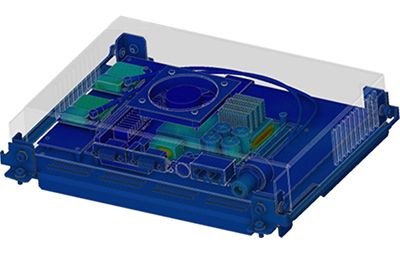
Ansys Discovery 2026 R1 introduces focused enhancements to strengthen upfront simulation workflows. Highlights include improved fluids meshing with sharp edge and thin structure capture, fluid virtual walls for simplified thermal modeling, and enhanced geometry detection to support model preparation. The release also expands workflow continuity across the Ansys ecosystem and adds capabilities such as CHT with Joule Heating and sensitivity analysis for early-stage design evaluation.

Additive
Ansys 2026 R1 advances the Additive suite with new build‑sequence controls for realistic AM and EBM, region‑based thermal conditions, and multi‑material support. DED workflows improve with multi‑axis G‑code, tool orientation, and path‑aware anisotropy. The Additive Manufacturing Process Parameter (AMPP) in App Catalog accelerates LPBF parameter studies with tabular comparisons and evaluations of bead behavior, porosity, and microstructure.
AI
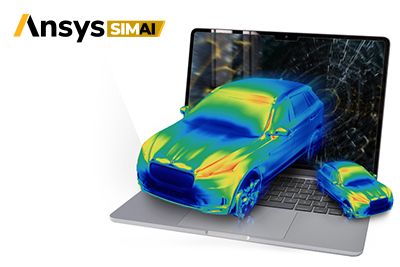
2026 R1 delivers a major evolution of the Ansys AI portfolio, introducing a refreshed product structure and expanded capabilities. The release introduces Ansys GeomAI, an AI concept-exploration solution that learns from reference designs to generate novel concepts and streamline exploration. Ansys SimAI now also offers two tiers: SimAI Premium, the full cloud scale solution with new features, and SimAI Pro, a desktop version for fast local AI training and prediction. scale solution, and SimAI Pro, a desktop version for fast local AI training and prediction.

Autonomous Vehicle Simulation
With 2026 R1, AVxcelerate introduces three systems-to-silicon innovations: NVIDIA Omniverse integration establishes a unified pipeline for real-world 3D digital twin creation, reducing sim-to-reality gap; the Light Propagation Engine (LPE) models true multispectral light transport for physically accurate camera sensing in complex lighting & weather; and visual radar tooling enables precise Tx/Rx antenna configuration & verification. Together with native NCAP scenarios, these capabilities elevate perception fidelity and enable rigorous, safety-focused ADAS/AV validation.

Connect
2026 R1 marks another leap forward for Ansys Connect with strategic innovations for MBSE, Simulation data management, and simulation optimization. Ansys MBSE delivers extended SysML v2 language support, driving more efficient Digital Engineering workflows. Ansys Minerva accelerates engineering workflows with a cleaner interface, faster data navigation, smarter forms, and stronger governance. Ansys optiSLang enhances connectivity, optimization, and automation with new solver and AI integrations, improved calibration through advanced optimization algorithms, and a lighter, more flexible installation.

Digital Missions Engineering
Ansys Digital Mission Engineering (DME) products continue to empower our customers to design the future with confidence, with enhancements that streamline end‑to‑end workflows. This new release breaks down silos between specialized engineering teams and speeds up development cycles with integrated modeling environments, for aerospace and defense industry applications, streamlining end-to-end workflows with multi-product integrations such as Ansys SCADE Display to prototype, design, and integrate displays, and Ansys HFSS for high fidelity antenna design.

Digital Twin
2026 R1 delivers major innovations across Ansys TwinA and Twin Builder, boosting modeling intelligence, workflow efficiency, and analytics. Enhancements include expanded Hybrid Analytics, a redesigned Fusion UI, new TFT and Neural ODE methods, improved ROM tools, stronger thermal and nonlinear modeling, integrated Engineering Copilot, better FMU co‑simulation, Battery Wizard upgrades, and the new Ansys CoSim product.

Electronics
2026 R1 delivers a new PI solver, enhanced usability, workflows, and meshing across HFSS, Q3D, and SIwave, boosting capacity, speed, and reliability for system‑to‑silicon applications, including advanced packaging, RF/antenna, rigid‑flex PCBs. Maxwell brings faster 2D transients, better efficiency, full encryption for 3D components, and improved ECAD-MCAD. Motor-CAD provides more accurate axial-flux machine design and efficiency prediction. Icepak boosts UX, meshing, and system-level thermal integrity.
Embedded Software
2026 R1 boosts modeling and testing with enhanced diagrams, new pragmas, better UI discoverability, and refreshed test results. Code generation is more efficient, and connectivity expands with Simulink, SAM/SysML, FMI, Python, and PyScadeOne updates. SCADE advances HMI, control, and AUTOSAR workflows with new test‑harness tools, ARINC 661 automation, improved V&V, IDE UX upgrades, GPT assistance, and expanded AUTOSAR Classic support, reinforcing safety‑critical development.

Fluids
Ansys Fluids 2026 R1 delivers critical enhancements to meet performance and productivity. The Fluent GPU Solver continues to improve, with more robust models across many applications. Usability updates in Ansys Fluent help increase productivity through Fluent Web Interface and HPC advances. Lastly, performance gains across FreeFlow, Rocky, Thermal Desktop, CFX, and TurboGrid include new integrations with other Ansys products, new usability features, and improved physics.

Materials
Ansys Materials 2026 R1 focuses on connecting materials data across the simulation digital thread, improving the user experience for faster material insights, and expanding data coverage. This release introduces Connected Materials, an Ansys-hosted data offering providing direct access to high-quality materials data from within key Ansys solvers. It also expands Granta MI with enhanced visualization tools, a new battery manufacturing workflow, and data updates across all our materials libraries.

Optics
Ansys Optics 2026 R1 advances optical and photonic engineering with streamlined Stray Light Analysis workflows, robust Optical Design Exchange (ODX) between Ansys Zemax OpticStudio and Ansys Speos for NX, and practical NEST tolerancing. The Synopsys OptoCompiler-Ansys Lumerical integration enables seamless PIC modeling, accurate system simulation, and efficient cross-tool collaboration for high-fidelity results.

Safety Analysis
The 2026 R1 release delivers an end-to-end safety workflow from system to silicon, bringing software, hardware and IP functional safety analysis in one unified workflow validation, with Ansys medini analyze and Synopsys VC Functional Safety Manager (VC-FSM) integration. This powerful combination enables seamless incorporation of system-level safety assessments and chip-level safety analysis. 2026R1 brings new AI capabilities for Safety Analysis with Ansys Engineering Copilot in medini analyze, providing intelligent assistance and centralized resources for the safety workflow, AI-powered support and easy access to key knowledge bases, including training and forums.
Semiconductors
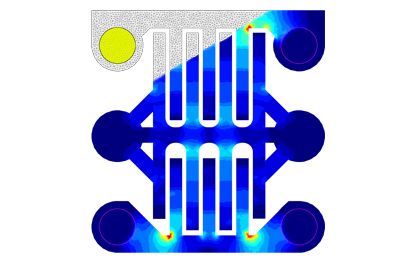
A major focus of the Synopsys 2026.03 release has been the delivery of a first set of joint solutions with Ansys semiconductor products. The newly announced solutions deliver unique and differentiated value by bringing together the flagship semiconductor products from both companies for better chip design results (power, performance, area) and faster time to results. can be grouped into three main areas: enhanced multiphysics design capabilities, higher accuracy multiphysics signoff to manufacturing, and significant new electromagnetic capabilities for high-speed analog and 3DIC designs
Structures
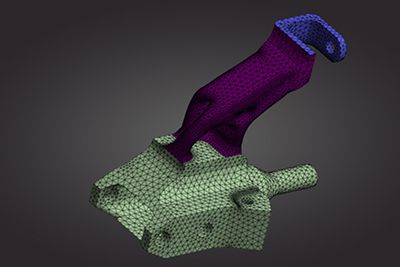
The 2026 R1 release delivers targeted enhancements across Ansys Structures, strengthening efficiency, simulation fidelity, and engineering confidence. Ansys Mechanical accelerates mesh‑based workflows with Direct Morphing, GPU‑aware resource prediction, and seamless Sherlock access. LS‑DYNA enhances multiphysics simulation with improved battery thermal modeling, advanced (S‑)ALE meshing, and faster post‑processing. Ansys Motion boosts system‑level performance with enhanced planetary gear modeling, solver speedups, and more efficient visualization. Sherlock advances electronics reliability with advanced thermal‑event cycle counting and system‑level BGA life prediction, while Forming increases robustness, reporting efficiency, and realism across workflows.